Behind the drape
The Karaikudi loom: where kandangi checks are born
5 min read
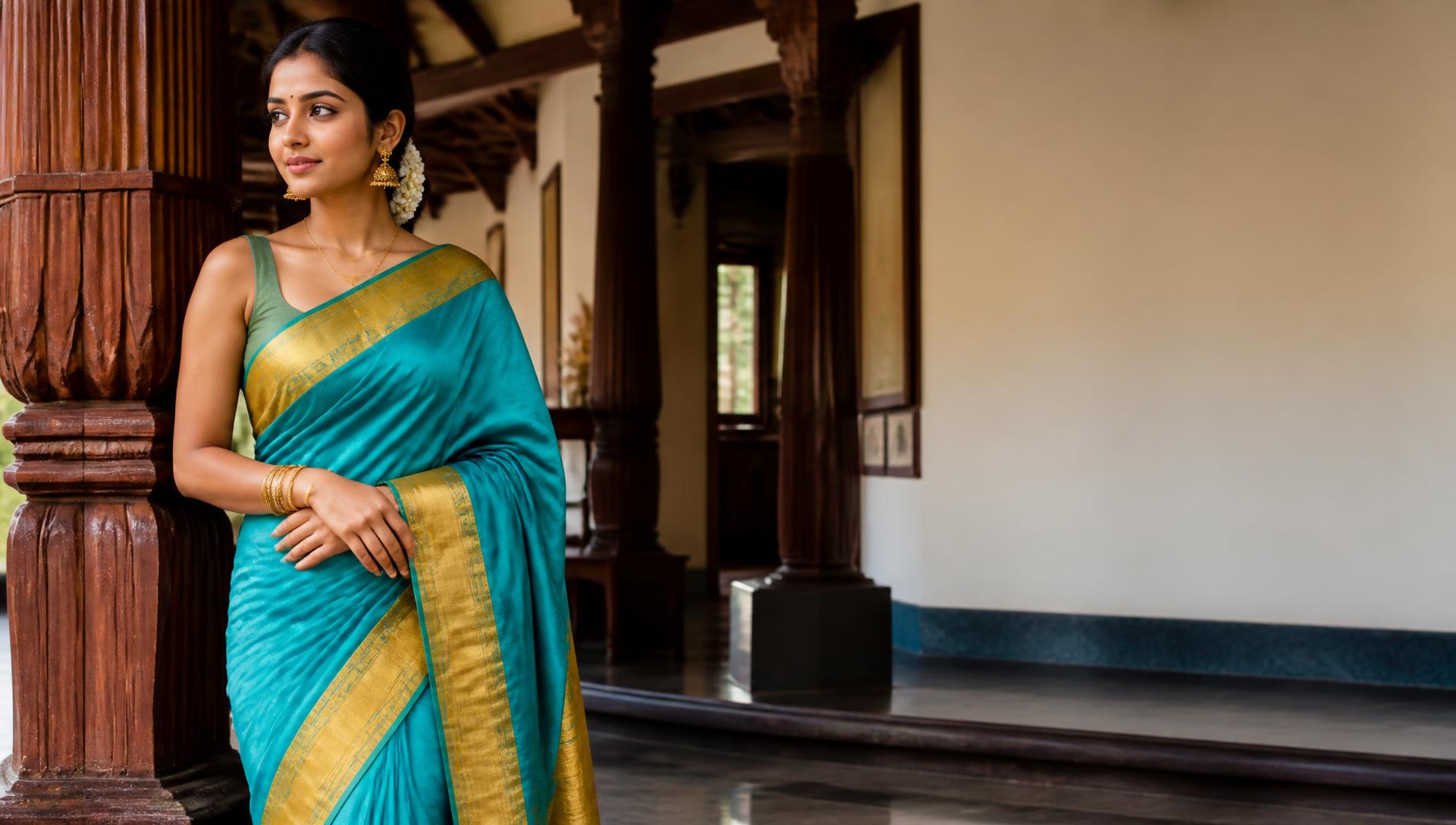
Karaikudi sits at the heart of the Chettinad region, and its weaving households have made the same cloth for well over a century: wide checks, contrast borders, cotton heavy enough to stand on its own.
The kandangi is defined by its border. In a true korvai, the border is woven with a separate warp and interlocked with the body by hand — which is why the colour change is sharp and the join never frays.
Colours came from the region's trade routes: mustard and maroon, parrot green and red, indigo and magenta. They were chosen to read clearly across a courtyard, and they still do.
A single saree takes three to five days on a pit loom, with two weavers working the treadles and the border in coordination. Nothing about that pace has been shortened.
We buy per weave rather than per metre, so the household decides how long a saree should take. It is the only way the craft stays worth practising for the next generation.